
Scientists examining one of the world’s most iconic religious images say they have uncovered a mysterious detail that could challenge traditional explanations.
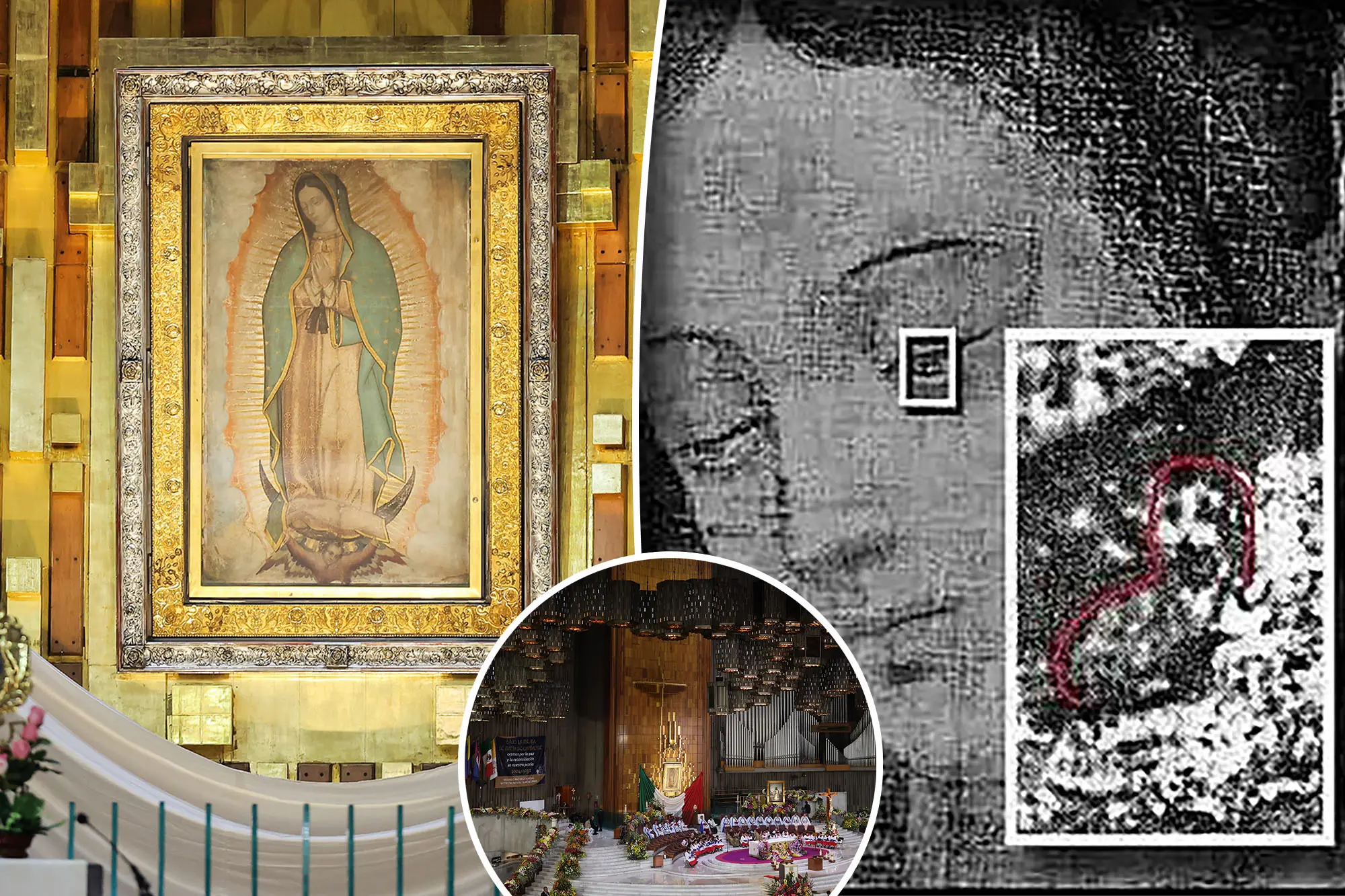
While analyzing the Tilma of Guadalupe—a cactus-fiber cloak believed by many Christians to bear a miraculous image of the Virgin Mary—researchers report finding at least 13 tiny human figures reflected in the eyes.
These microscopic figures are so small that they are only visible when the image is digitally magnified, according to a report titled “Miraculous Image of Our Lady of Guadalupe” published by St. Michael the Archangel Catholic Church in Texas.
The researchers suggest the figures may represent witnesses who were present when the image first appeared in the 16th century.
“The image of Our Lady of Guadalupe has been the subject of numerous technical studies since 1751, as well as extensive scientific investigations in recent years,” the team noted, according to the Daily Mail.

Researchers say they have identified at least 13 tiny human figures hidden within the eyes of the image.
Despite extensive scientific investigations, no explanation has been found. According to experts, the phenomenon “defies science and all human reasoning,” continuing to baffle both scientists and skeptics alike.


The reflections are so tiny that they can only be seen when the image is digitally magnified.
The cloak itself is woven from coarse maguey cactus fibers, which normally decay within a few decades. Yet the Tilma of Guadalupe has survived for nearly 500 years with minimal deterioration, despite exposure to candle smoke, humidity, dust, and frequent handling by pilgrims.
Historical records highlight the tilma’s remarkable resilience, noting that it appears unusually resistant to insects and dust, and that its vibrant colors have remained bright even without any protective covering.

According to the report, none of the findings provide a clear scientific explanation, which continues to “defy science and all human reasoning” and baffles both scientists and skeptics.
The tilma, housed at St. Michael’s Catholic Church in Lake Jackson, Texas, measures approximately five feet by three feet. It is made of two pieces of fabric sewn together with a simple seam running through the center of the image.

The original tilma of Juan Diego is displayed above the high altar of the Basilica of Our Lady of Guadalupe.
Researchers analyzing high-resolution digital images found that sections of the face, hands, robe, and mantle appear to have been created in a single step, with no visible sketches, corrections, or brush strokes.
Based on these observations, scientists concluded that the technique used to create the image cannot be easily explained by any known 16th-century painting methods.


